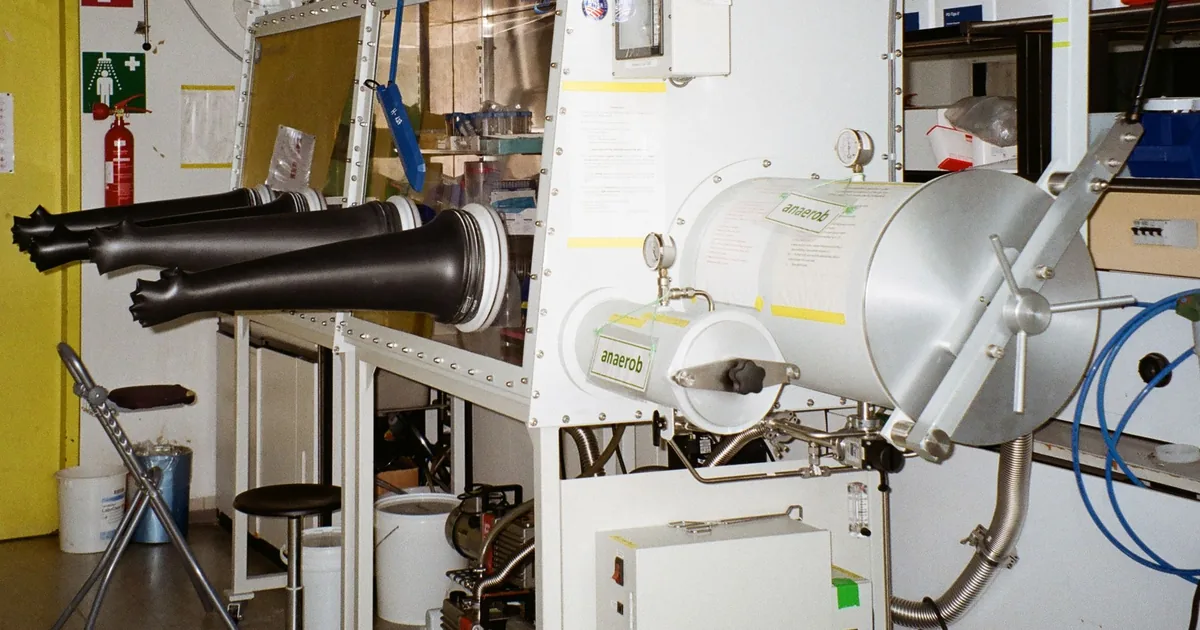
A RABS (restricted access barrier system) and an isolator both separate the grade A critical zone of an aseptic process from operators, but they are not the same technology. An isolator is sealed and bio-decontaminated automatically; a RABS is enclosed but not fully sealed and is disinfected manually. EU GMP Annex 1 (2022) treats them differently, and the most visible consequence is the cleanroom grade each one needs around it. This guide compares the two on the points that decide a facility design.
Key takeaways
- EU GMP Annex 1 (2022), paragraph 4.3, expects RABS or isolators to be considered in the contamination control strategy; any alternative approach has to be justified.
- A RABS used for aseptic processing needs a grade B background. An open isolator needs at least grade C and a closed isolator at least grade D, justified by risk assessment (Annex 1, 4.20).
- Isolator interiors must be bio-decontaminated by an automated, validated cycle with a sporicidal agent, typically vaporised hydrogen peroxide (4.22). RABS rely on a validated manual sporicidal disinfection.
- The background grade drives most of the facility cost: gowning, airlock sequence, air change rates and pressure cascade all follow from it.
What is the difference between a RABS and an isolator?
The core difference is sealing. Annex 1 defines an isolator as an enclosure that provides "uncompromised, continuous isolation" of its interior and can undergo reproducible bio-decontamination. A RABS is defined as an enclosed but not fully sealed system, with rigid walls and integrated gloves, whose doors are opened rarely and only under strictly pre-defined conditions.
Both must deliver grade A conditions in the critical zone (Annex 1, 4.19). Everything else follows from whether the barrier is sealed or not.
| Criterion | RABS | Isolator |
|---|---|---|
| Enclosure | Rigid walls and glove ports, not fully sealed | Sealed, continuous isolation from the room |
| Interior conditions | Grade A, unidirectional airflow, first air protection | Grade A; airflow may be non-unidirectional in closed isolators for simple operations |
| Minimum background grade | Grade B | Grade C (open) or grade D (closed), justified in the CCS |
| Bio-decontamination | Validated manual sporicidal disinfection | Automated, validated cycle with a sporicidal agent in gaseous or vaporised form |
| Glove integrity testing | Visual check at each use; integrity test at periodic intervals | Leak test at least at the start and end of each batch or campaign |
| Operator access | Doors can open under defined procedures | Through gloves, half suits and transfer ports only |
What background cleanroom grade does each technology need?
Annex 1 paragraph 4.20 sets the minimum background grades: grade B for a RABS used in aseptic processing, grade C for an open isolator and grade D for a closed isolator. For isolators, the final grade is a risk-assessment decision documented in the contamination control strategy, and a higher grade should be considered where additional process risks are identified.
The grade gap is large. Under Annex 1 Table 1, a grade B room in operation may contain up to 352,000 particles of 0.5 µm or larger per m³, while grade D has no predetermined limit in operation. At rest, the limits for particles of 0.5 µm or larger rise from 3,520 per m³ in grade B to 3,520,000 per m³ in grade D.
| Grade | At rest | In operation | Can surround |
|---|---|---|---|
| B | 3,520 | 352,000 | RABS, open or closed isolator |
| C | 352,000 | 3,520,000 | Open or closed isolator |
| D | 3,520,000 | Not predetermined | Closed isolator |
Annex 1 also asks for airflow pattern studies to show there is no air ingress: at the interfaces of open isolators, and during RABS interventions, including door openings where applicable.
Open vs closed: RABS and isolators each come in two types
Annex 1 defines open and closed isolators. A closed isolator stays sealed throughout operation and transfers materials through aseptic connections to auxiliary equipment. An open isolator has engineered openings, typically protected by continuous overpressure, for continuous or semi-continuous material ingress or egress, which is why it needs a higher background grade.
For RABS, "open" and "closed" are industry terms rather than Annex 1 categories. In common usage, an open RABS discharges its filtered air into the surrounding room, while a closed RABS returns air through ducting and keeps the enclosure under its own supply and exhaust. Both still need a grade B background under Annex 1. Negative pressure isolators are reserved for products where containment is essential, such as radiopharmaceuticals (4.19).
How does the choice change the facility design?
Choosing between a RABS and an isolator is a facility decision as much as an equipment decision. The background grade determines the gowning standard, the number of airlock steps, the HVAC load and the monitoring effort for every square metre around the line.
- Gowning: every entry into grade B requires a clean, sterilised gown, sterile mask, eye cover and a second pair of sterile gloves (Annex 1, 7.13 and 7.15). Grade C needs a trouser suit and grade D a general protective suit.
- Airlocks and change rooms: reaching grade B from an unclassified corridor usually takes a D, C, B change sequence; a grade D isolator room can be reached in one step. See our guide to cleanroom airlock design.
- Pressure cascade: each step between adjacent grades needs a pressure difference of at least 10 Pa (guidance value, 4.14), so fewer grade steps mean a simpler cascade. The GMP zoning layout follows directly.
- HVAC: higher grades need more supply air and faster recovery, which raises fan energy and plant size. Our cleanroom HVAC design guide covers air change rates by grade.
- Observation: Annex 1 (4.17) asks new facilities to allow observation of grade A and B operations from outside, through windows or cameras.
The trade-off is time and equipment complexity. Isolators add bio-decontamination cycle time, transfer systems and a larger validation package; RABS keep a more conventional changeover but carry the running cost of a grade B suite.
Glove integrity and decontamination requirements
Gloves are the weakest point of both barriers, and Annex 1 paragraph 4.21 sets different testing regimes for each. Glove replacement frequency must be defined in the CCS for both technologies.
- Isolators: glove system leak testing at a minimum at the beginning and end of each batch or campaign, plus a visual inspection at each use and after any manipulation that may affect integrity.
- RABS: gloves in the grade A area are sterilised before installation and sterilised or bio-decontaminated before each campaign, visually checked at each use and integrity tested at periodic intervals.
For decontamination, Annex 1 (4.22) requires isolator interiors to be bio-decontaminated by an automated, validated process that includes a sporicidal agent in a suitable form, such as gaseous or vaporised. RABS interiors receive a routine sporicidal disinfection by a validated method that reaches all interior surfaces. In both cases, cleaning must come first, because residues reduce the agent's effectiveness.
How to choose between a RABS and an isolator
There is no regulatory ranking between the two: Annex 1 accepts both, provided the choice is justified in the contamination control strategy. In practice, the decision weighs a few factors:
- Product risk: potent or toxic products push towards closed isolators with containment.
- Interventions: processes with frequent manual interventions are harder to run in a sealed isolator.
- Batch profile: many short campaigns pay the isolator decontamination cycle time repeatedly.
- Building constraints: retrofitting a grade B suite into an existing building can cost more than housing an isolator in grade C or D.
- Lifecycle cost: gowning, environmental monitoring and HVAC energy for a grade B room recur every year.
Whichever technology you choose, document the reasoning in your contamination control strategy. The FDA guidance on sterile drug products produced by aseptic processing (2004) also covers isolators in a dedicated appendix, and the full text of EU GMP Annex 1 sets out the barrier requirements in paragraphs 4.18 to 4.22.
Common mistakes when comparing RABS and isolators
- Comparing equipment prices only, without the grade B suite, gowning and HVAC that a RABS brings with it.
- Assuming every isolator can sit in grade D: the open isolator minimum is grade C, and the final grade depends on the risk assessment.
- Planning RABS door openings as routine practice, when Annex 1 expects them rarely and under strictly defined conditions.
- Fixing the background grade late, after the airlocks and pressure cascade have been drawn.
Frequently asked questions
What is the difference between a RABS and an isolator?
An isolator is a sealed enclosure that gives continuous isolation from the room and is bio-decontaminated by an automated, validated cycle. A RABS is a rigid-wall enclosure with glove ports that is not fully sealed, can open its doors under defined conditions and is disinfected manually. Under EU GMP Annex 1, a RABS needs a grade B background, an isolator grade C or D.
What background grade is required for an isolator?
EU GMP Annex 1 (2022), paragraph 4.20, sets a minimum of grade C for open isolators and grade D for closed isolators. The final background grade must be based on a risk assessment documented in the contamination control strategy, considering bio-decontamination, automation, glove manipulations, transfer systems and door openings before decontamination.
What background grade does a RABS need?
A RABS used for aseptic processing needs a background of at least grade B, according to EU GMP Annex 1 (2022), paragraph 4.20. Airflow pattern studies must also show that no air enters the grade A zone during interventions, including door openings where the design allows them.
What is the difference between open and closed RABS?
In common industry usage, an open RABS releases its filtered air into the surrounding cleanroom, while a closed RABS returns air through ducting and keeps its own supply and exhaust. Annex 1 does not define these two RABS types, and both still require a grade B background for aseptic processing.
Are isolators better than RABS?
Isolators give stronger separation and allow a lower background grade, but they add decontamination cycle time, transfer systems and validation work. RABS are more flexible for manual interventions but need a grade B suite. EU GMP Annex 1 accepts both; the choice must be justified in the contamination control strategy.
How are pharmaceutical isolators decontaminated?
EU GMP Annex 1 (2022), paragraph 4.22, requires an automated, validated bio-decontamination cycle that includes a sporicidal agent in a suitable form, such as gaseous or vaporised. Vaporised hydrogen peroxide is the most common agent. Interior surfaces must be cleaned first, and gloves extended with fingers separated so the agent reaches them.
How PharmaTwin helps
PharmaTwin is a pharmaceutical facility simulator that lets you test the room-level consequences of a barrier choice before equipment is ordered. Model the filling suite once as grade B around a RABS and once as grade C or D around an isolator, and compare the air change rates, pressure cascade, airlock sequence and personnel flows each option produces. It supports the facility side of the decision; the barrier itself still needs its own qualification.